



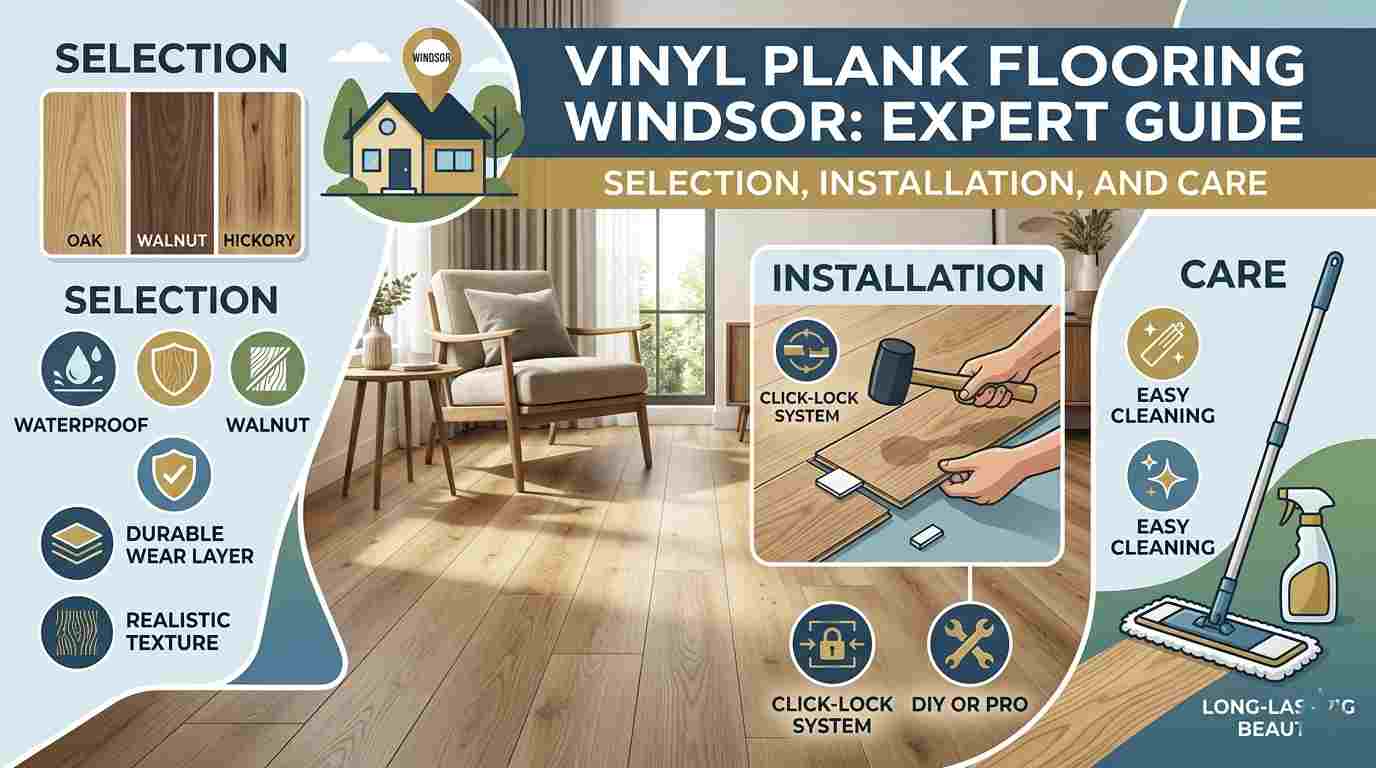
You can transform your Windsor home with vinyl plank flooring that looks like real wood or tile while standing up to pets, kids, and humid basements. Vinyl plank gives you waterproof durability, easy maintenance, and a wide range of styles at prices that fit many budgets, making it a practical choice for most Windsor households.
This article walks you through selecting the right vinyl plank flooring Windsor style and quality, and what to expect from professional installation and upkeep so you can choose confidently and avoid common pitfalls.
Selecting the Right Style and Quality
Decide which look, performance level, and warranty match your room’s traffic, moisture exposure, and budget. Focus on plank construction, wear layer thickness, and design details to balance appearance and longevity.
Types of Vinyl Plank and Their Features
You’ll choose among three common constructions: luxury vinyl plank (LVP) with multiple layers, rigid core (WPC or SPC), and glue-down vinyl.
- LVP (multi-layer vinyl): softer feel, good for residential rooms and moderate traffic. It often has realistic wood graining and a flexible backing for easier transitions.
- WPC (wood plastic composite): thicker, with better underfoot comfort and sound reduction. It’s suitable for living areas and most basements when paired with the right underlayment.
- SPC (stone plastic composite): denser and more dimensionally stable. Use SPC where heavy furniture, wide temperature swings, or commercial-level wear are concerns.
- Glue-down: thinner profile, excellent for large commercial spaces or very flat subfloors. It resists shifting but can be harder to replace.
Check the wear layer (measured in mils): 6–12 mils for low-to-moderate use, 12–20 mils for high-traffic homes, and 20+ mils for commercial or very heavy use. Also compare vinyl core types, bevel finishes, and locking systems for installation ease and repairability.
Popular Design Trends in Windsor
You’ll see several trends in Windsor installations driven by local homes and climate needs.
- Wide planks (6–9 inches) mimic upscale hardwood and open smaller rooms visually.
- Gray and warm brown tones dominate; choose undertones that match your cabinets and brick exteriors common in Windsor neighborhoods.
- Hand-scraped and wire-brushed textures hide scratches and suit older home styles you’ll find around the city.
- Waterproof collections are popular for basements and main-floor kitchens because of seasonal humidity and occasional flooding risk.
Consider plank length and repeat pattern when ordering to avoid repetitive visuals. Samples in your actual lighting will reveal undertones and gloss level better than online photos.
Evaluating Durability and Warranties
You must evaluate wear layer, backing, and manufacturer warranty to predict lifespan.
- Wear layer: thicker equals longer visible life. For family homes pick ≥12 mils; for high-use or pet households choose 20+ mils.
- Core and backing: rigid cores resist dents; attached underlayment improves sound and comfort. Confirm the product resists moisture at the core level if you need basement-grade performance.
- Warranty details: inspect what the warranty covers—residential vs commercial use, wear-through, staining, fading, and edge separation. Note duration and prorated terms.
- Installation and maintenance clauses: some warranties require certified installers or specific adhesives; others void coverage for improper underlayment or subfloor prep.
Document purchase batch numbers and keep receipts. That protects you if replacement planks come from a different dye lot or if you need to claim a defect.
Professional Installation and Maintenance Insights
You’ll learn what to expect from Windsor installers, how to keep your vinyl plank flooring performing for years, and which maintenance mistakes cause the most damage.
Expert Installation Services in Windsor
Choose installers with local experience and positive reviews from Windsor homeowners and businesses. Verify they perform full subfloor inspections, moisture testing (especially for basements), and recommend appropriate underlayment or vapor barriers for your specific LVP/LVT product.
Ask for a written estimate that lists material, labor, trim, removal of old flooring, and cleanup. Confirm they use industry-standard tools for tight seams and clean cuts around doorways, and that they offer a warranty on workmanship. If you have pets or high-traffic areas, request installation patterns and transitions that minimize seam stress.
Schedule installation when indoor humidity is stable; installers should acclimate planks in the room 48–72 hours first. Expect a few hours to several days of work depending on square footage and complexity. Keep pets and foot traffic away until adhesive or locking systems fully set per manufacturer guidance.
Care Tips for Long-Lasting Floors
Sweep or vacuum daily or as needed to remove grit that scratches the wear layer. Use a soft-bristle broom or a vacuum setting designated for hard floors to avoid edge damage.
Dampen-mop with a manufacturer-approved cleaner once weekly or when spills occur. Avoid soaking the floor; wring the mop so it’s just damp. Use felt pads on furniture legs and place mats at exterior doors to trap dirt and moisture.
Maintain indoor humidity between 35–55% to reduce plank gap or cupping. Replace damaged planks promptly and keep pet nails trimmed to prevent punctures. Use protective runners in high-traffic zones like hallways and kitchens.
Common Maintenance Mistakes to Avoid
Never use steam cleaners or abrasive scrubbing pads; excessive heat and abrasion can delaminate or dull the wear layer. Avoid oil-based detergents and wax products that leave residues and reduce slip resistance.
Don’t drag heavy furniture across the floor. Lift and use sliders or plywood to distribute weight when moving appliances. Skipping entrance mats or failing to clean grit frequently leads to micro-scratches that worsen over time.
Ignoring manufacturer care instructions voids warranties. Keep records of purchase and installation details, and follow recommended cleaning products and schedules to retain warranty coverage and avoid costly repairs.